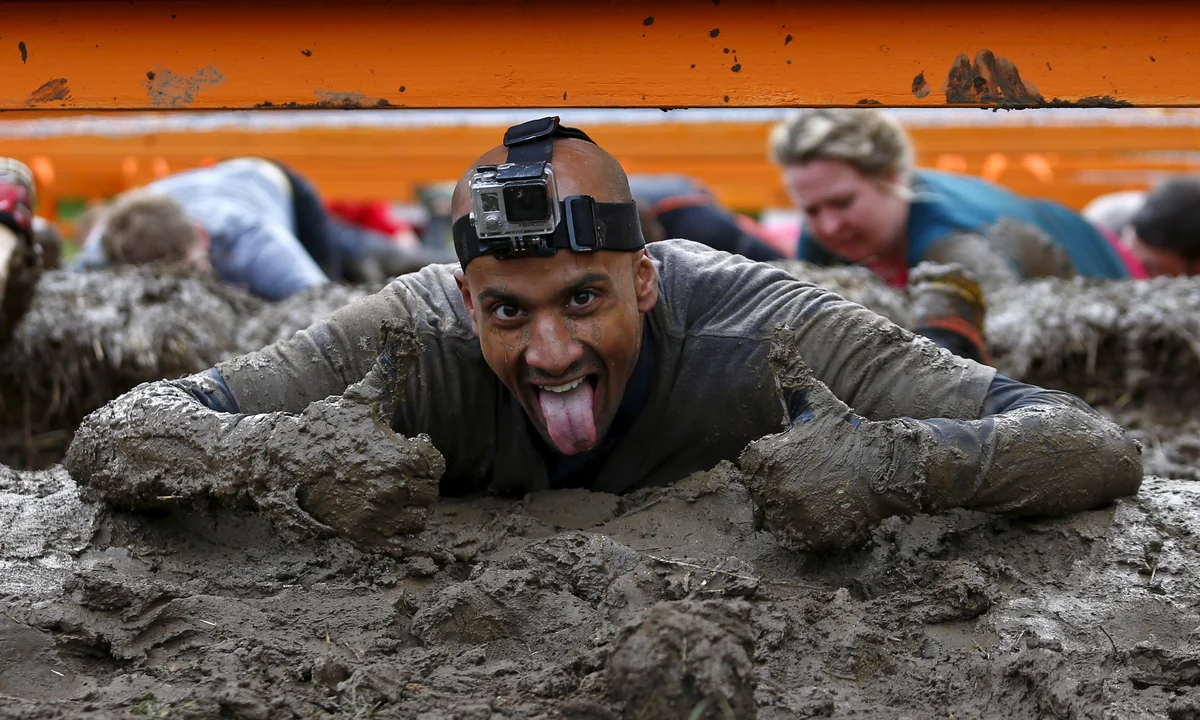
You’ve trained for three months. Your grip strength is there. Your running base is solid. You’ve visualized the obstacles. Then mile four hits and you’re chafed raw because your underwear turned into sandpaper the moment the first mud pit filled its fibers.
OCR gear failures are unforgiving. Here’s how to make sure underwear isn’t the one that ends your race.
What Makes OCR Conditions Uniquely Demanding
Obstacle course racing combines conditions that no single sport typically creates together. Running creates friction. Water creates wet fabric. Mud adds particulate to wet fabric. Crawling under barbed wire presses mud-filled fabric directly against skin under pressure.
Synthetic fabrics in this combination become abrasive. The polymer fiber structure, when filled with sand and mud particles, creates a mechanical abrasion surface that the fabric never was when clean. A synthetic blend that feels fine on the starting line feels like sandpaper at mile eight after two creek crossings and a mud crawl.
Natural fiber softness responds differently to this contamination. The fiber structure of organic cotton doesn’t change its surface character when saturated with water. Mud particles in the fabric don’t create the same cutting friction against skin because the fiber itself is smooth rather than textured.
In a Tough Mudder, your fabric becomes whatever the obstacle course puts into it. Choose accordingly.
What to Look for in OCR Underwear
Natural Fiber Surface Character
The abrasion performance of a fabric under mud and sand loading is a function of its fiber surface texture when contaminated. Cotton fiber stays smooth. Synthetic microfiber structures change their friction characteristics when filled with particulate. This is the primary distinction that matters for an eight-mile obstacle course.
Minimal Seam Profile
Every seam is a potential chafe point. In OCR conditions, potential becomes actual faster than in any other sport. Flatlock seam construction that sits against the skin without ridges is the minimum requirement. Look for organic cotton boxer briefs with flatlock stitching at all pressure points — leg openings, waistband, and side seams.
Fast Drying Under Sustained Wet Conditions
OCR courses alternate between dry running and full immersion. Your underwear will be wet for significant portions of the race. Fast drying within the wet-to-dry transitions matters for sustained comfort. Tightly woven organic cotton manages moisture without absorbing into a saturated mass that won’t release.
Waistband Stability Under Dynamic Loading
Crawling, climbing walls, and carrying heavy objects create waistband stress that running doesn’t. A waistband that rolls or bunches during these movements creates a localized pressure and abrasion point. A wide, cotton-inlaid waistband with structural stability performs through these varied demands.
Durability Through Race Conditions
The fabric should survive one complete OCR event without seam failure or structural degradation. Washing out post-race is the more important durability consideration for repeat racers: the garment needs to survive repeated cycles of mud immersion and high-temperature washing without losing its anti-chafe properties.
OCR Race Day Preparation
Test your race kit during training, not on race day. Wear your intended race day underwear on your longest training run, ideally in wet conditions if possible. OCR-specific discomfort emerges under extended running loads and can’t be predicted from a single 20-minute test.
Apply body glide to high-friction areas before the start. Even with the right fabric, body glide at the inner thighs and waistband is additional insurance for distances above ten miles. Natural fiber underwear reduces the need for this, but extreme conditions may still warrant both.
Avoid cotton gym underwear from mass-market brands. The organic cotton advantage specifically applies to tightly woven, properly constructed natural fiber garments. Loose-weave cotton absorbs moisture and becomes heavy in OCR conditions. The organic cotton boxer briefs category — with performance construction — is the relevant comparison, not generic cotton underwear.
Plan your post-race recovery. OCR underwear absorbs significant bacterial and chemical load from natural water crossings. Wash promptly with a quality detergent after every race. Natural fiber construction handles this washing frequency better than most synthetic alternatives.
Bring a dry change for immediately post-finish. The transition from race clothing to clean clothing within thirty minutes of finishing prevents prolonged exposure to the mud and bacterial load the course deposited in your fabric.
Why OCR Athletes Get the Underwear Wrong Most Often
The OCR community has detailed knowledge of shoes, compression, gloves, and headwear. The underwear conversation is almost entirely absent from pre-race planning resources, despite underwear being the garment most likely to cause a race-ending chafe event.
The most experienced OCR racers typically learned this lesson the hard way.
A blister costs you time. A chafe at mile six costs you the race experience entirely, and potentially significant skin damage that takes days to heal. The difference between a race that’s painful-but-manageable and one that’s genuinely injurious often comes down to what you wore under your shorts.
Natural fiber construction handles the specific contamination conditions of obstacle course racing better than synthetic alternatives. This is the gear conversation that race guides should include. After this article, at least it’s one you’ve had.