
In machining, efficiency is often measured by cycle time, spindle utilization, and output volume. However, one factor that directly influences all three is often underestimated: workholding. While cutting tools and machine performance receive most of the attention, the way a part is clamped and positioned has a major impact on how smoothly the entire process runs.
For many machine shops, setup time remains one of the biggest barriers to better productivity. Even when actual cutting time is well optimized, operators may still spend too much time aligning parts, checking offsets, adjusting fixtures, and verifying repeatability. These delays reduce machine utilization and make it harder to maintain a consistent workflow. In many cases, the problem is not a lack of machining capability, but a workholding system that is not designed for modern production demands.
That is why more manufacturers are rethinking how they approach vises, fixtures, and setup strategy.
Why Setup Time Deserves More Attention
In a production environment, setup time is more than just the preparation stage before machining begins. It is a direct cost. Every extra minute spent loading, aligning, or adjusting a part is time that the machine is not producing finished components. Over the course of a week or a month, those lost minutes accumulate into a significant productivity issue.
This is especially true in shops that handle multiple part types, short production runs, or frequent changeovers. In those environments, the ability to move quickly from one job to the next is just as important as raw cutting performance. A machine can only deliver strong output when the setup process is efficient enough to keep production moving.
That is where better workholding becomes valuable. A vise that simplifies part positioning and reduces manual adjustment can save time on every single setup. The savings may appear small on one job, but across repeated operations they become substantial.
Consistency Starts at the Clamping Stage
Setup efficiency is closely connected to machining consistency. If the part is not located the same way every time, operators may need to compensate through additional checks and corrections. That creates more variability in the process and increases the chance of dimensional drift or setup-related errors.
A good workholding solution helps standardize the starting point of each job. When parts are clamped in a predictable and repeatable way, setup becomes easier to control and production becomes easier to scale. Instead of relying entirely on operator experience, the process itself becomes more stable.
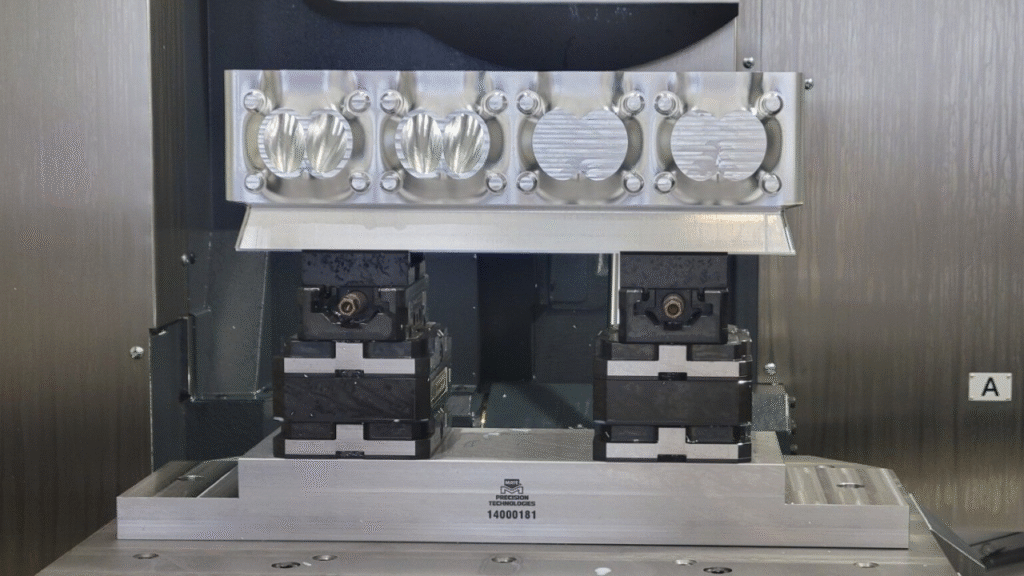
This is one reason why many manufacturers now prefer a dedicated 5 axis vise for advanced machining work. Rather than using a general-purpose vise for every application, they choose a solution designed to support both precise part positioning and improved access during multi-side machining.
Better Access Helps Reduce Extra Setups
One of the most common causes of long setup times is the need to re-clamp the workpiece multiple times. Every time a part must be repositioned, the process becomes slower and more complex. Additional setups also create more chances for error, especially when tight tolerances must be maintained across multiple sides of the part.
Modern workholding systems are increasingly designed to reduce this issue by exposing more of the workpiece during the first setup. This makes it easier to machine multiple faces without interruption and allows the machine to perform more operations before the part needs to be moved.
A properly designed 5 axis vise can play an important role here. By supporting better tool access and minimizing interference around the workpiece, it allows shops to take fuller advantage of 5-axis capability. This not only saves time, but also improves overall process consistency by reducing the number of repositioning steps.
Why Repeatability Improves More Than Accuracy
When shops think about repeatability, they often associate it only with accuracy. While that is true, repeatability also has a major effect on efficiency. A repeatable setup means operators can trust the process more. They do not need to spend as much time confirming that the part is seated correctly or adjusting the work offset after each load.
In high-mix or batch production, this confidence matters. The less time spent correcting minor setup differences, the more time the machine spends cutting. At the same time, inspection becomes more straightforward because the process is producing parts from a more stable foundation.
This is why workholding should not be evaluated only by clamping force. A vise may hold the part tightly, but if it does not do so consistently, the shop still loses time in the form of checks, corrections, and variation control. True productivity comes from combining secure holding with repeatable positioning.
Choosing from a Broader Range Makes More Sense
Not every machining task requires the same style of vise. Some applications need compact support for smaller precision parts. Others require stronger holding force, larger jaw capacity, or more specialized clamping structures. A shop that wants better long-term efficiency should look beyond one model and consider the full range of available workholding options.
Reviewing a broader cnc vise lineup allows buyers to match the solution to the actual demands of their machining process. This is a more practical approach than trying to make one general-purpose vise fit every job. When the workholding system matches the application more closely, both setup efficiency and machining reliability tend to improve.
A wider product range also gives shops more flexibility as production requirements evolve. Instead of starting over with a new supplier each time machining needs change, they can build a more consistent and scalable workholding strategy.
Workholding Is a Productivity Decision
For years, workholding was often treated as a secondary purchase, something selected after the machine, tooling, and programming were already decided. That mindset is changing. More shops now understand that the vise is not just a support tool. It is an important part of the production system itself.
The right workholding can reduce setup time, improve access, support repeatability, and make machining more consistent from one part to the next. These gains affect not only quality, but also profitability. In competitive manufacturing, even small improvements in setup efficiency can create a real operational advantage.
Conclusion
Reducing setup time and improving consistency are two of the most effective ways to strengthen machining performance, and both begin with better workholding. A well-designed vise does far more than hold the part in place. It helps create a faster, more predictable, and more efficient production process.
As shops continue to pursue tighter tolerances, shorter lead times, and more complex machining work, workholding will only become more important. The companies that invest in better setup strategy today are often the ones that achieve smoother production and stronger competitiveness tomorrow.
