Your cloud access security broker looks busy in the dashboard. It logs sessions, counts sanctioned apps, and generates weekly PDFs nobody reads. Meanwhile a contractor shared your entire customer list with “anyone with the link” three months ago, and no one noticed.
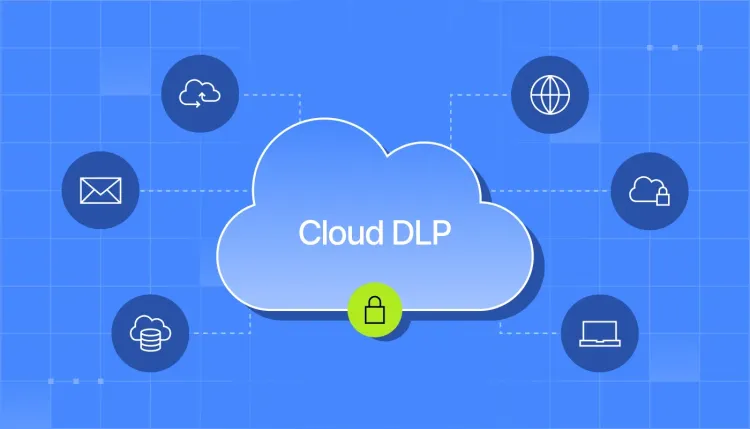
This post walks through the specific gaps that turn a CASB deployment into expensive shelfware, gives you a one-page audit to run this week, and lays out the four capabilities a real cloud data protection layer needs.
What Are the Most Common Cloud Access Security Broker Mistakes?
The most common CASB mistakes share one root cause: the tool was deployed to check a compliance box, not to actually remediate exposed data. Here are the five that cost the most.
- Watching only sanctioned apps. Your CASB sees Google Workspace and Microsoft 365. It does not see the Dropbox account an engineer opened last Tuesday, or the Notion workspace marketing uses to share decks with agencies.
- Treating external share reports as FYIs. The report lands in a shared inbox. Nobody owns it. Files shared publicly in Q1 are still public in Q4.
- Relying on regex for classification. Pattern matching catches credit card numbers in a spreadsheet. It misses a product roadmap, a signed contract, or a board deck — the files that actually matter when they leak.
- Having no remediation workflow. An alert fires. An analyst opens a ticket. The ticket sits. Two weeks later someone manually changes the share permission. By then it has been indexed.
- Assuming the endpoint is covered because the cloud is. CASB inspects API traffic to sanctioned SaaS. It does not stop a file being uploaded from a laptop to a random web form or a GenAI tool.
- Confusing visibility with control. Dashboards show activity. They do not prevent it. Seeing a bad share happen is not the same as stopping it.
- Skipping endpoint coverage entirely. A proper cloud data strategy pairs CASB with a dlp gateway that inspects web traffic leaving the device, so uploads to unsanctioned destinations never make it out.
How Do You Audit an Existing CASB Deployment?
Run this audit in one sitting. Mark each item pass, fail, or unknown. Unknown counts as fail.
Coverage
Every SaaS app with more than 10 active users is connected via API, not just logged as a URL.
External share monitoring is on for every cloud storage app, not only the largest one.
Shadow IT discovery runs on endpoints, not only on egress from the corporate network.
Classification
The tool can identify PII, PCI, PHI, and unstructured IP without a regex library you maintain.
Classifications include a human-readable reason, not just a rule ID.
False positive rate on your last 30 days of alerts is under 20 percent.
Remediation
A single click in the alert makes an exposed file private.
Every high-severity alert has an owner and an SLA, not a shared inbox.
You can show three specific files your CASB made safe in the last quarter.
Endpoint linkage
Web uploads from managed endpoints are inspected, not only API calls to sanctioned apps.
GenAI pastes and uploads are logged per-user.
Blocking an app in the cloud console also blocks it on the endpoint.
If you fail five or more, your CASB is cosmetic.
What Should a Real Cloud Access Security Broker Actually Do?
A real CASB gives you four capabilities that map directly to how data actually leaks. Miss any one and the other three lose most of their value.
Continuous External Share Monitoring
The tool watches every externally shared file in Google Drive and OneDrive, not just the ones flagged at upload time. Sharing state changes over time — a file shared internally in March becomes “anyone with the link” in August. Without continuous monitoring, you catch the first event and miss every change after.
Context-Aware Classification on Every File
The tool reads the file and decides what it is, the same way a person would. A contract looks like a contract because of the language inside it, not because it contains a nine-digit string. Context-aware classification gives you fewer false positives and catches the files regex never flags — roadmaps, pricing sheets, signed NDAs.
One-Click Remediation Inside the Alert
The fix lives in the alert. You see the file, the sharing state, the classification, and a button that makes it private. No ticket, no SaaS console hop, no waiting for the file owner. Remediation that takes 10 seconds beats remediation that takes 10 days, every time.
Endpoint and Cloud in the Same Policy
Upload controls on the endpoint and share controls in the cloud come from one policy, enforced in both places. A strong ai endpoint security layer stops the upload before it happens, while CASB catches anything that slipped through a personal account or an unmanaged device.
Frequently Asked Questions
What does a cloud access security broker do?
A CASB sits between your users and your cloud apps to enforce security policy — visibility into usage, data protection on shared files, threat detection, and compliance controls. Modern CASBs connect via API to sanctioned SaaS and inspect activity in near-real time. The good ones also remediate, not just observe.
Is CASB DLP different from endpoint DLP?
Yes. CASB DLP watches data at rest and in motion inside cloud apps — shared Drive files, OneDrive links, Slack attachments. Endpoint DLP watches data leaving the device — uploads, clipboard, USB. You need both, and they should share a policy so a block in one enforces in the other. A modern platform like dope.security ships cloud and endpoint DLP as one product instead of two bolt-ons.
Is Microsoft Defender a CASB?
Microsoft Defender for Cloud Apps includes CASB functionality focused on Microsoft 365 and a library of third-party apps. It is a real CASB for Microsoft-centric environments. It is weaker for organizations running Google Workspace, mixed SaaS stacks, or heavy shadow IT, where coverage and classification gaps show up quickly.
The Cost of a Cosmetic Deployment
A CASB that only watches does not protect you. It creates a record of the exposure after the fact — useful for the post-incident report, useless for the incident itself. Every month a cosmetic deployment runs, the backlog of shared-but-forgotten files grows and the odds of one of them being the wrong file go up. Audit yours this week, fix what fails, and replace the pieces that only generate PDFs.