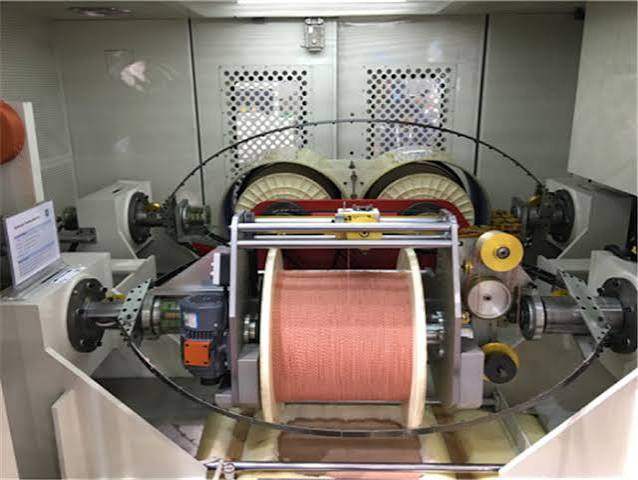
Modern communication systems depend heavily on reliable network cables. From offices and data centers to homes and industrial facilities, LAN cables provide Lan Cable Pairing Machine the physical connection required for fast and stable data transmission. As demand for high-quality network infrastructure continues to grow, cable manufacturers need production equipment that can improve efficiency, consistency, and overall product quality. A Lan Cable Pairing Machine is an important part of this manufacturing process because it automates the pairing and twisting of insulated conductors with greater accuracy and speed than manual methods.
Understanding LAN Cable Pairing
LAN cables typically contain multiple insulated copper conductors arranged into pairs. These conductors are twisted together according to specific requirements to reduce electromagnetic interference and maintain reliable signal transmission. The pairing process must be consistent because variations in twist, tension, or alignment can affect the final cable’s electrical performance.
Traditional manual or less-automated production methods can make it difficult to maintain uniformity throughout long production runs. Operators may face challenges related to tension control, alignment, production speed, and material handling. Automated pairing equipment helps manufacturers address these issues by controlling important production parameters throughout the process.
Faster Cable Manufacturing
One of the biggest benefits of using a Lan Cable Pairing Machine is increased production speed. Automated equipment can continuously pair conductors at a consistent rate, reducing the interruptions associated with manual production.
A machine-based process also allows manufacturers to handle larger production orders more efficiently. Instead of relying heavily on manual labor for repetitive pairing operations, workers can focus on machine supervision, quality inspection, maintenance, and other important production tasks.
Higher production speed can help manufacturers meet delivery schedules while making better use of available factory resources. When properly integrated into a cable production line, the pairing machine can contribute to a smoother and more organized manufacturing workflow.
Improved Pairing Consistency
Consistency is essential when producing communication cables. Each conductor pair needs to maintain appropriate characteristics throughout the cable length. Uneven twisting or inconsistent pairing can create differences in cable performance.
A Lan Cable Pairing Machine is designed to provide controlled and repeatable operation. The machine manages conductor movement and twisting more precisely, helping maintain consistent pair formation during continuous production.
This level of consistency can be particularly valuable for manufacturers producing large quantities of network cable. Instead of depending entirely on individual operator technique, automated equipment provides a standardized production process.
Better Control of Cable Quality
Quality control begins during manufacturing. If conductors are not paired correctly, problems may appear later during testing, installation, or actual network operation. Automated pairing technology can help reduce production variations that may negatively affect cable quality.
Manufacturers can configure machine parameters according to the cable design and production requirements. Depending on the equipment, these settings may include production speed, tension, twisting characteristics, and other operational factors.
Maintaining controlled production conditions makes it easier for manufacturers to establish repeatable quality standards. This can reduce the number of defective products and improve confidence in the finished cable.
Reducing Electromagnetic Interference
Twisting conductor pairs is an important part of network cable construction because the twisting arrangement helps reduce interference between conductors and from external electrical sources. Different cable categories and designs can require specific twisting characteristics.
A properly configured pairing machine helps maintain a consistent twisting pattern along the cable. Uniform production can support the electrical characteristics expected from the finished network cable.
For manufacturers, this means the pairing process is not simply about joining conductors together. It is also about creating a consistent cable structure that supports dependable signal transmission.
Lower Dependence on Manual Labor
Cable pairing can involve repetitive movements when performed manually. Repetitive production tasks can consume significant amounts of time and may introduce variations between operators.
Automation reduces the amount of repetitive work required from production staff. A Lan Cable Pairing Machine can perform the core pairing operation continuously while operators monitor production and respond to machine requirements.
This does not necessarily eliminate the need for skilled workers. Instead, it changes how labor is used. Employees can spend more time on machine setup, preventive maintenance, quality checks, material preparation, and production management.
Better Material Management
Efficient cable manufacturing requires careful handling of copper conductors and insulation materials. Poor tension or uncontrolled material movement can cause production problems such as uneven pairing, conductor damage, or unnecessary material waste.
Modern pairing equipment can provide controlled material feeding and tension management. This allows conductors to move through the production process in a more stable manner.
Better material control can contribute to fewer production interruptions and improved utilization of raw materials. Over time, reducing waste can have a meaningful impact on manufacturing costs.
Supporting Different Cable Production Requirements
Network cable manufacturers may produce different cable constructions depending on customer requirements and market demand. Production equipment therefore needs to provide sufficient flexibility for different applications.
A Lan Cable Pairing Machine can be configured or adjusted according to the required conductor arrangement and production specifications. This flexibility allows manufacturers to adapt their production processes instead of relying on a completely separate manual system for every cable design.
Before selecting equipment, manufacturers should evaluate conductor size, required production speed, cable construction, available floor space, and other technical requirements. Choosing a machine that matches the intended application can improve long-term production efficiency.
Improving Production Line Efficiency
A pairing machine can become an important link within a larger network cable manufacturing system. Cable production may include processes such as conductor preparation, insulation, pairing, cabling, sheathing, printing, testing, and final packaging.
When each stage operates efficiently, the overall production line becomes more productive. A reliable pairing process helps prevent bottlenecks between conductor preparation and later cable manufacturing stages.
Automation also makes production easier to monitor. Manufacturers can establish standard operating parameters and identify potential problems earlier, helping maintain a stable workflow.
Supporting Quality Assurance
Quality assurance is an important consideration for network cable manufacturers. Finished cables may need to undergo various inspections and electrical tests before they are approved for shipment.
A consistent pairing process provides a stronger foundation for quality control. When machine settings remain stable, manufacturers can more easily identify whether a problem is related to raw materials, machine operation, or another stage of production.
Regular maintenance and calibration are also important. Even advanced machinery needs proper inspection and adjustment to maintain reliable performance. Operators should follow the equipment manufacturer’s maintenance recommendations and monitor production conditions regularly.
Cost Benefits for Manufacturers
Investing in automated cable production equipment requires an initial financial commitment, but the long-term benefits can make automation valuable. Increased production speed, reduced waste, consistent quality, and improved labor utilization can all contribute to better manufacturing economics.
A Lan Cable Pairing Machine may be particularly useful for manufacturers handling medium- to high-volume orders. When production demand is consistent, the machine can help increase output without requiring a proportional increase in manual labor.
Manufacturers should consider both the purchase cost and the total operating value of the equipment. Factors such as energy consumption, maintenance requirements, production capacity, reliability, and spare-part availability can influence the overall return on investment.
Choosing the Right Pairing Machine
Selecting suitable equipment requires more than simply comparing machine prices. Manufacturers should examine the machine’s production capacity, compatibility with their cable designs, adjustment range, control system, tension management, maintenance requirements, and available technical support.
It is also useful to evaluate the manufacturer’s experience in cable production machinery. Reliable technical documentation, operator training, replacement parts, and after-sales support can make equipment easier to operate over its service life.
A machine that matches the factory’s production requirements can provide better results than equipment selected solely because it has a lower purchase price.
The Future of Automated Network Cable Production
Network connectivity continues to expand as businesses, homes, cloud services, data centers, and industrial systems require dependable communication infrastructure. This creates ongoing demand for efficient cable manufacturing.
Automation is likely to remain an important part of this development. Advanced production machinery can provide greater control, repeatability, monitoring, and efficiency. Manufacturers that adopt suitable automation technologies can improve their ability to respond to changing market requirements.
The role of a Lan Cable Pairing Machine extends beyond simply twisting conductors. It contributes to a more controlled manufacturing process and helps manufacturers achieve consistent production results.
Conclusion
A Lan Cable Pairing Machine can significantly enhance network cable production by improving speed, consistency, material control, and production efficiency. Automated pairing reduces repetitive manual work while providing a more standardized method for producing conductor pairs.
For cable manufacturers, these advantages can lead to better quality control, reduced waste, improved productivity, and greater flexibility. As demand for reliable network infrastructure continues to increase, efficient cable production equipment will remain an important investment. By selecting and maintaining the right pairing machine, manufacturers can create a more productive manufacturing environment and produce network cables with consistent performance and quality.