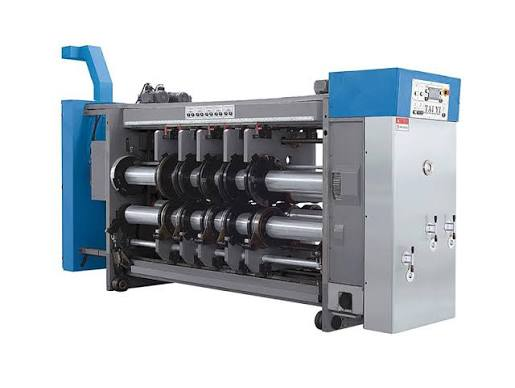
Choosing the right high speed die cutter manufacturer is an important decision for businesses involved in packaging, printing, converting, and other industries that require accurate and efficient high speed die cutter manufacturer cutting. A die cutter is a major investment, and the right machine can improve production speed, reduce waste, maintain product quality, and lower operating costs. However, with many manufacturers offering different machines, technologies, and services, selecting the best option requires careful consideration.
Understand Your Production Requirements
Before choosing a manufacturer, clearly identify your production requirements. Consider the materials you need to cut, such as paper, cardboard, corrugated board, plastic sheets, labels, or other substrates. The thickness, size, and characteristics of these materials will influence the type of die cutting machine you need.
Production volume is another important factor. If your business handles large orders and operates continuously, you may need a high-speed machine designed for intensive production. Smaller operations may not require the same level of capacity. Understanding your requirements helps you focus on manufacturers that offer equipment suitable for your specific applications.
Evaluate Machine Speed and Performance
Speed is one of the main reasons businesses invest in advanced die cutting equipment. However, maximum speed should not be the only factor considered. A machine may advertise an impressive speed, but its actual performance depends on material type, product size, cutting complexity, and operating conditions.
When comparing a high speed die cutter manufacturer, examine the machine’s practical production capacity. Ask about average operating speeds, feeding systems, automation features, registration accuracy, and performance under continuous production. A well-designed machine should maintain consistent cutting quality while operating at high speeds.
Check Cutting Accuracy and Quality
Precision is essential in die cutting. Even small cutting errors can result in wasted materials, rejected products, and additional production costs. A reliable manufacturer should provide machines capable of maintaining accurate cuts throughout long production runs.
Look for technologies such as automatic registration, precise die positioning, advanced control systems, and stable feeding mechanisms. Ask the manufacturer about their quality-control procedures and whether machines are tested before delivery.
If possible, request product samples produced using the machine. Testing actual materials can give you a better understanding of cutting quality and overall performance.
Consider Automation Features
Modern die cutting machines increasingly use automation to improve productivity and reduce manual work. Features such as automatic feeding, touchscreen controls, programmable settings, automatic adjustment, and monitoring systems can make production more efficient.
Automation can also reduce the possibility of human error. When operators can quickly save and recall production settings, changing between different jobs becomes easier. Businesses planning to expand should consider machines with scalable automation features that can support future production needs.
Research Manufacturer Experience
The manufacturer’s experience can provide valuable insight into its reliability and technical capabilities. Companies with extensive experience in die cutting technology are often better prepared to understand different production requirements and provide suitable solutions.
Research how long the manufacturer has been operating and what industries it serves. Look for information about its engineering capabilities, production facilities, research and development activities, and previous installations.
Customer reviews and case studies can also help you understand how the manufacturer’s equipment performs in real-world applications. Pay attention to comments about machine reliability, service quality, spare parts availability, and technical support.
Examine Build Quality and Components
A high-speed die cutter operates under demanding conditions, so build quality matters. Machines constructed with durable components and robust frames are generally better suited for continuous production.
Ask about the materials and components used in important systems, including the feeding unit, cutting mechanism, drive system, control system, and electrical components. Reliable components can help reduce breakdowns and extend machine service life.
It is also useful to determine whether replacement components are readily available. Difficult-to-source parts can cause unnecessary production delays when maintenance is required.
Compare After-Sales Support
Buying the machine is only the beginning of the relationship with a manufacturer. Technical support, maintenance, training, and spare parts are essential for keeping production running smoothly.
Before making a decision, ask what kind of after-sales service the manufacturer provides. Find out whether installation and operator training are included. You should also understand how technical problems are handled and how quickly replacement parts can be supplied.
A manufacturer with responsive support can help reduce downtime and ensure that operators understand how to use the equipment correctly.
Look at Energy Efficiency and Operating Costs
The initial purchase price should not be the only cost considered. A machine that is inexpensive to purchase may become expensive to operate if it consumes excessive energy, requires frequent maintenance, or produces significant material waste.
Compare energy consumption, maintenance requirements, expected service life, and production efficiency. Efficient feeding and cutting systems can help minimize material waste, while reliable components can reduce maintenance expenses.
Calculating the total cost of ownership can provide a more realistic comparison between different manufacturers and machines.
Ask About Customization
Every production environment is different, so a standard machine may not always provide the best solution. Some manufacturers offer customization options based on material requirements, production volume, product dimensions, automation needs, or factory layout.
Ask whether the manufacturer can modify machine configurations or integrate additional equipment. A flexible solution may provide greater value if your production requirements change in the future.
Verify Safety Features
Safety should always be a priority when selecting industrial machinery. A high-speed die cutting machine should include appropriate safety systems to protect operators and maintenance personnel.
Check for emergency stops, protective guards, safety sensors, interlocking systems, and other relevant safety features. The manufacturer should also provide clear operating and maintenance instructions. Proper training is essential to ensure that employees can operate the machine safely.
Compare Price and Overall Value
Price is an important consideration, but choosing the cheapest machine may not always be the best decision. A higher-quality machine can provide better productivity, longer service life, improved accuracy, and lower maintenance costs.
When comparing manufacturers, evaluate the complete package rather than the initial price alone. Consider machine performance, warranty coverage, installation, training, spare parts, technical support, energy efficiency, and expected lifespan.
The best investment is one that provides reliable performance and delivers value throughout its operating life.
Request a Demonstration Before Buying
A machine demonstration can help you make a more informed decision. Ask the manufacturer to demonstrate the equipment using materials and products similar to those used in your facility.
During the demonstration, observe cutting accuracy, feeding performance, machine speed, adjustment time, noise levels, operator controls, and overall stability. This practical evaluation can reveal details that may not be obvious from brochures or technical specifications.
Choose a Manufacturer for Long-Term Partnership
Selecting a high speed die cutter manufacturer should be viewed as a long-term business decision. A reliable manufacturer should provide more than advanced equipment. It should offer technical expertise, dependable support, quality components, training, and solutions that can grow with your business.
Take time to compare several manufacturers, review their machines, check customer feedback, and discuss your specific production requirements with their technical teams. Avoid making a decision based solely on price or advertised speed.
The right manufacturer can help your business achieve faster production, consistent cutting quality, lower waste, and improved operational efficiency. By carefully evaluating machine performance, build quality, automation, service, safety, energy consumption, customization, and total ownership costs, you can confidently choose equipment that supports your production goals for years to come.