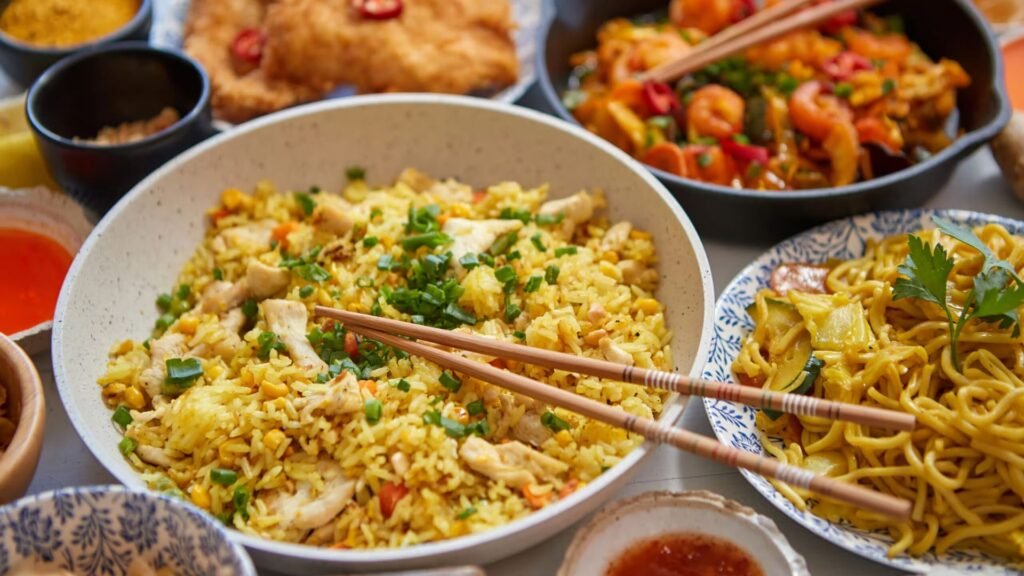
New York City and Chinese cuisine share a deep, intertwined history spanning well over a century. From the moment the first Chinese immigration waves established roots in the lower quarters of Manhattan in the late 19th century, a profound cultural and culinary dialogue began. Food became the bridge through which a new community established an economic foundation and communicated its heritage to a rapidly growing metropolis. The story of the Chinese Restaurant New York is a narrative of resilience, adaptation, creative genius, and ultimate cultural conquest.
Today, Chinese food is not merely an imported novelty; it is a foundational pillar of the New York identity. It is a cuisine that has transcended its original borders, migrating from the dense, historic blocks of lower Manhattan’s Chinatown into every single neighborhood across the five boroughs. This culinary diaspora has taken many forms, adapting to the unique economic, social, and cultural landscapes of each area. The most fascinating chapter of this ongoing story is taking place right now on Manhattan’s Upper East Side, where historic culinary traditions are merging with cutting-edge technology and modern fusion philosophies to create an entirely new generation of dining.
The Foundations: Lower Manhattan and the Birth of New York Takeout
The initial architecture of Chinese dining in New York was constructed out of necessity within the tight confines of Chinatown. These early kitchens served traditional Cantonese dishes primarily to a working-class immigrant community. However, as non-Chinese New Yorkers began discovering the incredible flavors, textures, and value of the food, a rapid process of culinary adaptation began.
To appeal to Western palates, resourceful chefs developed entirely new culinary creations. Dishes like Chop Suey, Chow Mein, and Egg Foo Young were born—dishes that, while virtually unknown in mainland China, represented a highly creative and accessible form of cross-cultural fusion. This style of cooking spread rapidly across the city, giving rise to the classic neighborhood Chinese takeout joint. With its iconic paper boxes, fortune cookies, and lightning-fast delivery workers, the Chinese Restaurant New York became a universal symbol of urban comfort and reliability. It was a dining model built entirely around convenience, affordability, and accessibility.
The Regional Explosion and the Rise of Uptown Sophistication
As immigration laws evolved in the latter half of the 20th century, a new wave of culinary artists arrived from diverse provinces across China, including Sichuan, Hunan, Fujian, and Shanghai. This influx completely transformed the city’s food landscape, breaking the monopoly of Cantonese cooking and introducing New Yorkers to a thrilling world of diverse flavor profiles. Vast food capitals emerged in Flushing, Queens, and Sunset Park, Brooklyn, offering uncompromised regional authenticity.
Concurrently, a massive shift was occurring in the residential neighborhoods of Manhattan. As the palates of New Yorkers became increasingly sophisticated, the demand for high-quality, diverse Asian food spread uptown. On the Upper East Side, a neighborhood defined by its discerning residents and high standards, the traditional takeaway model began to evolve. Diners were no longer satisfied with greasy, uniform dishes; they demanded fresh ingredients, complex seasoning, and a higher level of culinary execution. This created a fertile ground for a new style of restaurant—one that honored the speed and comfort of classic Chinese dining while boldly embracing modern culinary innovation.
The Modern Frontier: Tech-Driven Fusion on the Upper East Side
This long historical trajectory has culminated in a spectacular modern movement that seamlessly blends traditional Chinese culinary formats with contemporary global flavors and futuristic operations. At the absolute forefront of this contemporary wave is Brooklyn Dumpling Shop, located at 453 E 78th St. This establishment represents a highly sophisticated evolution of the Chinese Restaurant Upper East Side scene, demonstrating how a business can respect the past while boldly engineering the future.
The location embodies the spirit of New York’s historic food culture—fast, innovative, and incredibly flavorful—while upgrading the execution to match the digital lifestyle of 2026. It serves as a living testament to how Chinese culinary formats can be continually reinvented to capture the imagination of a new generation of urban diners.
Analyzing the Menu Mastery: Where East Meets West
The true brilliance of this modern uptown destination lies in its ability to treat the traditional dumpling wrapper as a blank canvas for global comfort food profiles. The kitchen respects the ancient art of dumpling making—requiring the perfect thickness, elasticity, and texture of dough—but utilizes it to deliver iconic American flavors.
- The Philly Cheesesteak Dumpling: A masterful mashup that integrates finely shaved, high-quality steak, rich melted cheese, and sweet caramelized onions inside a delicate dumpling pouch. The result is a spectacular burst of savory juices with every bite, mimicking the mechanics of a classic Shanghai soup dumpling but delivering a flavor profile rooted in American comfort tradition.
- The Buffalo Chicken Dumpling: Capturing the exact fiery, tangy kick of artisanal Buffalo wing sauce combined with tender chicken, this dumpling offers an explosion of sharp flavor. It provides all the culinary satisfaction of a classic sports-bar appetizer within a clean, portable, and elegant package.
- The Mac & Cheese Dumpling: A playful and deeply satisfying creation that combines creamy, rich cheese sauce and pasta inside a wrapper fried to a flawless golden crisp, offering an extraordinary contrast in textures.
Honoring the Legacy of the Dim Sum Masters
While the restaurant has achieved widespread acclaim for its revolutionary fusion items, it remains deeply committed to mastering the classics. For those seeking a timeless, authentic Chinese Restaurant Upper East Side experience, the menu features pristine interpretations of foundational dishes.
Their Classic Pork and Cabbage Dumplings are a masterclass in balance, combining perfectly seasoned ground meat with fresh ginger, garlic, and scallions to deliver a deeply comforting flavor profile. The Chicken and Vegetable Dumplings offer a lighter, vibrant alternative that delivers exceptional depth of flavor without any heaviness. This dual mastery of both the experimental and the traditional ensures that the restaurant can satisfy any palate in the neighborhood.
Engineering the Future of Fast-Casual Dining
The success of Brooklyn Dumpling Shop at 453 E 78th St is driven equally by its revolutionary operational design. By utilizing a modernized, tech-driven iteration of the classic “automat” system, the restaurant has eliminated the traditional friction points of urban dining. Customers place orders via smartphones or touch-screen kiosks, and retrieve their freshly prepared meals from secure, temperature-controlled glass lockers using a unique QR code.
This innovative system ensures absolute order accuracy, maintains food at its peak serving temperature, and provides a level of speed and convenience that fits perfectly into the busy lifestyles of Upper East Side residents. From its roots in the crowded tenements of lower Manhattan to the sleek, automated counters of 78th Street, the journey of Chinese cuisine in New York is a story of continuous triumph. Establishments like Brooklyn Dumpling Shop prove that by honoring foundational culinary arts while embracing technological innovation, a restaurant can continue to conquer the hearts and palates of New Yorkers for generations to come.