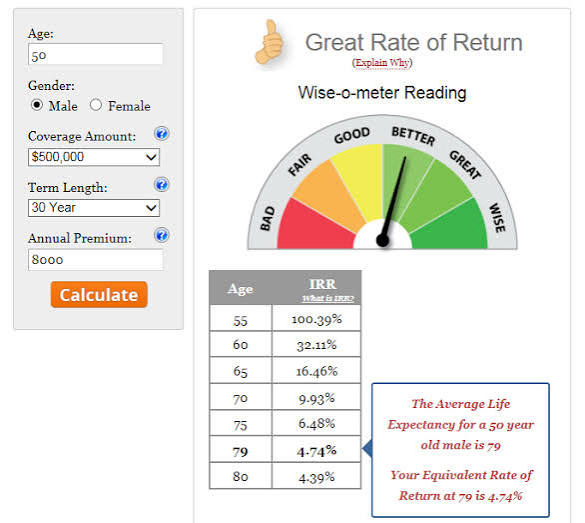
Choosing the right amount of life insurance coverage can feel complicated, especially when you are trying to balance your family’s financial needs with an affordable term life insurance calculator premium. A term life insurance calculator can make this process easier by helping you estimate how much coverage may be appropriate for your situation. Instead of relying on a random coverage amount, you can use your income, debts, expenses, future goals, and family responsibilities to create a more personalized estimate.
Understanding how these calculators work and what information to enter can help you make a more informed decision. While a calculator provides an estimate rather than a final recommendation, it can be a useful starting point when comparing different term life insurance options.
What Is a Term Life Insurance Calculator?
A term life insurance calculator is an online tool designed to estimate the amount of life insurance coverage you may need. Term life insurance provides protection for a specific period, such as 10, 20, or 30 years. If the insured person passes away during the policy term, the beneficiaries generally receive the policy’s death benefit, subject to the policy’s terms and conditions.
The calculator typically asks questions about your financial situation, including your annual income, outstanding debts, household expenses, savings, and future financial obligations. It uses this information to produce an estimated coverage amount.
The goal is not to determine an exact number that everyone should purchase. Instead, the calculator gives you a practical figure to consider before exploring policies and speaking with an insurance professional.
Why Estimating Coverage Needs Matters
Having too little coverage could leave your family struggling with expenses if your income disappears. On the other hand, purchasing substantially more coverage than necessary could result in higher premiums.
Your coverage should ideally reflect the financial responsibilities that would remain if you were no longer able to provide income. These responsibilities may include mortgage payments, education costs, household expenses, personal debts, and other long-term financial commitments.
A term life insurance calculator helps organize these factors so you can consider them together rather than focusing only on your current income.
Gather Your Financial Information First
Before using a calculator, collect some basic financial information. Having accurate figures available can make your estimate more useful.
Start with your annual income. If you are the primary income earner, your coverage may need to replace a significant portion of your earnings for several years. If you have a spouse or another household income, consider how much of your income is actually needed to maintain your family’s current lifestyle.
Next, consider your outstanding debts. These may include a mortgage, personal loans, education loans, credit card balances, or other financial obligations. Some debts may not disappear after death, so including them in your calculation can help provide a more complete picture.
You should also estimate your current savings and investments. Existing assets may reduce the amount of life insurance coverage your family needs because those resources could potentially help cover future expenses.
Consider Your Family’s Future Expenses
Current expenses are only part of the calculation. Think about the financial needs your family may face in the future.
For parents, children’s education can represent a major expense. You may want your coverage estimate to account for expected tuition and other education-related costs. You should also consider childcare, housing expenses, transportation, and everyday living costs.
If your family depends heavily on your income, consider how long they might need financial support. A younger family with small children may require protection for a longer period than someone whose children are already financially independent.
Your calculator may ask about these future expenses directly, or you may need to include them when reviewing the suggested coverage amount.
Enter Your Existing Life Insurance Coverage
If you already have life insurance through an employer or another provider, include it when estimating your additional needs.
For example, suppose your estimated requirement is $750,000 and you already have $250,000 of suitable existing coverage. You may need to consider whether an additional $500,000 policy could address the remaining gap.
However, employer-provided coverage can have limitations. Some workplace policies may not remain in force if you change jobs, so it is important to understand the terms before relying entirely on them.
Think About Income Replacement
One of the most important factors in life insurance planning is income replacement. Your family may need financial support for several years after your death.
A calculator may use your annual income and a selected number of years to estimate the amount required to replace lost earnings. For example, if your household relies on your income to pay regular expenses, a longer replacement period could increase the recommended coverage.
However, income replacement should not be viewed in isolation. Your family’s actual needs depend on expenses, savings, debts, existing insurance, and other financial resources.
Include Debts and Major Financial Obligations
Outstanding debt can significantly affect the amount of coverage you need. A mortgage is often one of the largest obligations considered in life insurance planning.
Other debts may also be relevant. If you have loans or other financial commitments, adding them to the calculator can help ensure that your estimate does not overlook important obligations.
You may also want to consider future financial commitments, such as helping children with education or supporting a dependent family member.
Choose an Appropriate Policy Term
Estimating the coverage amount is only one part of the process. You also need to consider how long the coverage should last.
Common term lengths include 10, 20, and 30 years. The appropriate period depends on your financial responsibilities and goals.
For example, parents may want coverage that lasts until their children are financially independent. Someone with a long-term mortgage may consider a term that aligns with the period in which the mortgage will be repaid.
A calculator may provide suggestions, but your personal circumstances should guide the final decision.
Review the Calculator’s Results Carefully
Once you enter your information, the calculator will typically provide an estimated coverage amount. Do not treat this number as an absolute requirement.
Instead, use it as a starting point. Review the assumptions behind the calculation and consider whether they accurately represent your circumstances.
Ask yourself whether the estimate accounts for your family’s living expenses, debts, future goals, savings, and existing insurance. If your financial situation is complicated, professional advice may help you evaluate the result more thoroughly.
Update Your Estimate Over Time
Your life insurance needs can change as your circumstances change. A coverage estimate that makes sense today may not be appropriate several years from now.
Major events such as marriage, having children, buying a home, changing jobs, receiving a significant pay increase, or paying off major debts can affect your financial responsibilities.
For this reason, consider reviewing your coverage periodically. Using a term life insurance calculator again after a major financial change can help you determine whether your current coverage still fits your needs.
Use the Calculator as a Planning Tool
A term life insurance calculator is most useful when treated as a planning tool rather than a final answer. It can help you understand the factors that influence coverage and give you a clearer idea of what to discuss when comparing policies.
After estimating your needs, compare policy terms, coverage amounts, premiums, exclusions, and other conditions. Make sure you understand what a policy covers before making a purchase.
The right amount of term life insurance depends on your unique financial situation. By gathering accurate information, considering both current and future obligations, and reviewing your estimate regularly, you can make the process of determining coverage much easier.
Ultimately, the purpose of life insurance is to provide financial protection for the people who depend on you. A thoughtful estimate can help ensure that your policy is aligned with that goal without choosing coverage based on guesswork alone.